THREE QUESTIONS TO DIDERIK BATENS
1) How did you start your work on paraconsistent logic?
Thanks to my logic and epistemology teacher, Leo Apostel, I became acquainted with several early non-standard logic papers and attended two lectures by Alan Anderson while he briefly visited Belgium. Later, my PhD on explanation and induction made it clear that scientific methodology requires criteria which cannot be formulated with the help of CL (classical logic). Spending 1972--73 at Pitt, I had the opportunity to learn from seminars by and discussions with Nicholas Rescher, Alan Anderson and a bit Nuel Belnap, then on sabbatical. While I remained sceptical about the relevance programme---not about relevant implications---I was convinced of the need for paraconsistency. The crucial argument was that, whatever one's view about the world, we need logic to reason from our theories and some of these are unavoidably inconsistent, at least for a while. Soon after my return from the USA, Leo Apostel had collected a large number of papers on paraconsistent logics, preparing for his Logique et dialectique. This collection provided a survey of available results. I liked especially Newton da Costa's work. He basically retained the classical approach to logic, not trying to solve all problems at once, and his research was driven by applications rather than by abstract conceptual tenets.
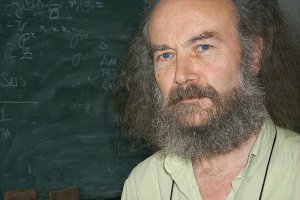 Born November 15, 1944 in Berlin-Köpenick, Germany
2) How did you develop your work on paraconsistent logic?
It seemed to me that a rather fundamental problem had not been solved or even raised, viz.\ to define a logic that is just like CL, except that it is paraconsistent. So this was the first task I set myself in the domain, combining it with the study of logics between the basic paraconsistent logic and CL, including maximal paraconsistent logics. Many paraconsistent logics from the literature could be ordered in a hierarchy---some turned out to rest on rather arbitrary choices. The 1980 version was merely propositional, but the predicative version of several logics was studied later, especially that of the basic logic CLuN. The resulting insights struck me as unexpected and instructive. An example is that, if negation is paraconsistent, Modus Tollens fails for material implication. If one wants Modus Tollens, one has to add it, or define a stronger implication than the material one. My interest in applications, especially to the philosophy of science, rather than in so-called principles, brought me to inconsistency-adaptive logics. Their proofs display a typical dynamics. It originates when a contradiction is presumed to be false unless and until proven otherwise. The idea required elaboration: inconsistencies have to be minimized in a systematic and formal way. Inconsistency-adaptive logics kept me fascinated to this day. Once inconsistency is detected, they are a necessary step towards restoring consistency. Even more fascinating is that the structure can be generalized to adaptive logics in standard format, which I take as a viable approach to all realistic forms of defeasible reasoning. Incidently, the great enmity, sometimes rabidity, of many classical logicians towards paraconsistency was a great encouragement to continue in the wrong direction.
3) How do you see the evolution of paraconsistent logic? What are the future challenges?
On the one hand, I would definitely encourage dialetheists to continue the search for a new synthesis of all knowledge in terms of a single `true' paraconsistent logic. On the other hand, I do not believe in that enterprise myself. Like thirty years ago, I see our future knowledge as composed of a multitude of theories, each organized by a possibly specific logic, and all interacting in specific ways, which may require further logics. Most importantly, I see this multitude in constant growth and dynamics.